If you are considering donor breast milk for your baby, it is natural to want to know where the milk has come from, how the donor has been screened and what happens to the milk before your baby receives it.
Donor human breast milk supplied through a formal human milk bank goes through multiple screening, processing and testing steps designed to reduce potential risks before it is provided to recipient babies.
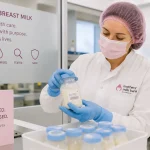
At Mothers Milk Bank Charity (MMBC), prospective donors complete health and lifestyle screening and blood testing. Accepted donor human milk is carefully received, identified, stored, pasteurised and tested as part of our milk bank’s safety and quality processes.
No food or medical process can be described as completely risk-free. However, formal human milk banking uses established safeguards designed to reduce risk and support the safe provision of donor human milk to recipient families and healthcare services.
What Is Donor Breast Milk?
Donor breastmilk, also known as donor human milk, is breastmilk expressed by a mother and voluntarily donated for use by another baby or family.
A mother’s own milk is generally the first choice for her baby when it is available and appropriate. There are circumstances, however, where a mother may not be able to produce enough milk to meet her baby’s needs or her own milk may be temporarily unavailable.
In these situations, donor milk may provide another human milk feeding option.
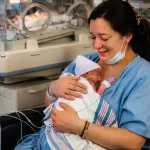
Donor human milk has a particularly important role in neonatal care, including when a mother’s own milk is unavailable for a premature or low-birth-weight baby.
How Does a Human Milk Bank Make Donor Breast Milk Safer?
A formal human milk bank does much more than simply collect donated milk from one mother and provide it to another family.
Human milk banking involves a series of controlled steps designed to manage potential risks associated with donated breast milk.
At MMBC, this includes:
- Donor registration
- Health and lifestyle screening
- Screening blood tests
- Review of relevant medications and health information
- Controlled handling and frozen storage
- Pasteurisation
- Microbiological and quality testing
- Controlled storage and distribution
These safeguards work together throughout the human milk banking process rather than relying on any single screening or processing step.
1. Donor Registration
The process begins before any donated milk is accepted.
Prospective donors register with us and provide information that allows our team to begin assessing whether they meet the requirements to become an approved donor.
Milk donors are not paid for their milk. Donation is voluntary and relies on mothers choosing to donate milk that their own baby does not need.
2. Health and Lifestyle Screening
Prospective donors complete health and lifestyle screening because some health conditions, medications, supplements and lifestyle factors may affect whether donated milk can be accepted.
Relevant medical history and medications are reviewed as part of this process.
Donors are also asked to inform the milk bank if relevant circumstances change during their period of donation.
3. Blood Testing
Health screening alone is not the complete screening process. Prospective donors are also required to complete blood tests for specified infectious diseases.
Our current donor screening includes testing for:
- HIV
- Hepatitis B
- Hepatitis C
- Syphilis
- HTLV 1 & 2
- CMV
Blood screening is one of several safeguards used when determining whether a prospective human milk donor can be approved.
4. Controlled Handling and Storage
How their milk is expressed, stored and transported matters too.
Approved donors receive guidance about expressing, labelling and storing milk intended for donation. Donated milk must remain appropriately frozen during storage and transportation to the milk bank.
When milk arrives at our facility, it enters a controlled milk banking process where donor and milk information can be tracked.
Traceability is an important part of formal human milk banking and allows donated milk to be identified and managed throughout processing, storage and distribution.
5. Pasteurisation
Accepted donor milk is pasteurised as part of the milk bank process.
Pasteurisation uses controlled heat treatment to reduce microbiological risks associated with human milk while seeking to retain its nutritional value as far as practical.
Pasteurisation is one part of a broader safety process. It works alongside screening, blood testing, careful handling, storage and microbiological testing.
6. Testing Before Release
Pasteurisation is not the final step.
Processed donor milk undergoes microbiological and quality testing as part of the pathology process before it is released for distribution.
The combination of donor screening, blood testing, controlled handling, pasteurisation, testing and traceability provides multiple layers of safeguards rather than relying on any single step.
What Blood Tests Are Required To Become a Donor?
Blood testing helps screen prospective donors for infectious diseases that may potentially be transmitted through human milk.
MMBC currently screens prospective donors for HIV, Hepatitis B, Hepatitis C, syphilis, HTLV 1 & 2 and CMV.
Blood tests do not replace health and lifestyle screening. They form one component of a wider donor assessment and human milk banking process.
If you are interested in becoming a donor, you can learn more about donating breast milk in Australia and our current donor eligibility requirements.
Are Donor Medications and Health Conditions Checked?
Yes. Prospective donors are asked about relevant health conditions, medical history, medications and supplements as part of the screening process.
Taking medication does not necessarily mean that someone cannot become a breast milk donor. Different medications and individual circumstances need to be considered.
For this reason, prospective donors should disclose relevant prescription medications, over-the-counter medicines and supplements rather than making their own decision about whether their milk is suitable for donation.
Our team can then assess this information as part of the donor screening process.
Why Is Donor Breast Milk Pasteurised?
Human milk is a biological substance. As with other biological materials, there is potential for contamination or transmission of microorganisms if milk is not appropriately collected, handled and processed.
Pasteurisation is therefore an important part of formal donor human milk banking.
Human milk banks use controlled heat treatment to reduce potential microbiological risks. This is combined with donor screening, blood testing, controlled handling and microbiological testing rather than being relied upon as the only safety measure.
The aim is not to make an unrealistic claim that donor milk is completely risk-free. Instead, formal milk banking applies multiple safeguards designed to reduce risk while preserving the nutritional and biological value of human milk as far as practical.
Is Donor Milk Tested After Pasteurisation?
Yes. Testing forms part of the process before pasteurised donor milk is released for distribution.
This is important because milk bank safety does not depend on one single safeguard.
Instead, the process uses multiple layers:
- Screen the donor
- Complete required blood testing
- Control milk handling and storage
- Pasteurise the donor milk
- Conduct appropriate testing
- Maintain traceability through storage and distribution
Together, these processes help manage potential risks throughout the journey from breast milk donor to recipient family.
Human Milk Bank Donor Milk vs Informal Milk Sharing
Families researching donor breast milk may encounter both formal human milk banks and informal milk sharing.
They are not the same process.
Informal milk sharing generally involves breast milk being provided directly from one individual to another outside a formal human milk banking system. The screening, handling and testing involved can therefore vary between individual arrangements.
Milk supplied through a formal human milk bank such as MMBC follows defined donor screening, processing and quality procedures.
A formal human milk bank process includes health and lifestyle screening, infectious disease blood testing, medication review, controlled milk handling and storage, pasteurisation, microbiological testing and traceability.
These safeguards may not all be present in an informal milk sharing arrangement.
This does not mean that every informal milk-sharing arrangement is the same. Rather, families should understand the differences between the defined safeguards of a formal milk bank and an informal arrangement when considering donor milk for their baby.
Why Is Donor Human Milk Used for Premature Babies?
Donor human milk has an important role in neonatal care, particularly when a mother’s own milk is unavailable for a premature or low-birth-weight baby.
Premature babies and other medically vulnerable infants may receive donor human milk in a neonatal intensive care unit or NICU when their mother’s own milk is unavailable or does not currently meet their needs.
A mother’s own breast milk remains important, and healthcare professionals can support mothers who wish to breastfeed, express or establish their milk supply.
Feeding decisions for premature and medically vulnerable babies should be made with the healthcare professionals responsible for the baby’s care.
Families can also learn more about how donor breast milk can support premature babies in the NICU.
Where Can Families Access Screened Donor Breast Milk?
Mothers Milk Bank Charity supports recipient families across Australia who are exploring donor human milk when a mother’s own milk is unavailable or does not fully meet her baby’s needs.
Families seek donor milk for many different reasons, including premature birth, low milk supply, maternal illness or medical treatment, separation, surrogacy, adoption and other individual circumstances.
Availability can vary depending on current donor milk supply and the needs of recipient families.
Families considering donor milk for their baby can register their interest with us to learn about eligibility, availability and the options that may be available.
Frequently Asked Questions About Donor Breast Milk Safety
Is donor breast milk safe for newborn babies?
Milk supplied through a formal human milk bank goes through donor screening, processing and testing procedures designed to reduce risk before it is released.
Whether donor human milk is appropriate for an individual newborn depends on the baby’s circumstances, and families should seek advice from their healthcare professional where appropriate.
Is donor breast milk pasteurised?
Yes. Donor breast milk accepted by MMBC is pasteurised as part of our human milk banking process.
Pasteurisation is used alongside donor screening, blood testing, controlled handling and testing as part of a broader system of safeguards.
Are breast milk donors tested for infectious diseases?
Prospective Mothers Milk Bank Charity donors complete health and lifestyle screening and required blood testing.
Our current blood screening includes HIV, Hepatitis B, Hepatitis C, syphilis, HTLV 1 & 2 and CMV.
Can medications pass into donated breast milk?
Some medicines and other substances can pass into human milk. This is one reason medications, supplements and relevant health information are reviewed during donor screening.
Prospective donors should disclose relevant medications rather than assuming that taking medication automatically makes them eligible or ineligible to donate.
Does pasteurisation remove everything beneficial from breast milk?
Pasteurisation can affect some components of human milk, but milk bank processing aims to reduce microbiological risk while retaining the nutritional and biological value of donor human milk as far as practical.
Balancing microbiological safety with the preservation of human milk is an important consideration in milk banking.
Is milk bank donor milk the same as informal milk sharing?
No. Milk supplied through a formal human milk bank follows defined donor screening, handling, pasteurisation, testing and traceability processes.
The safeguards used in informal milk-sharing arrangements can vary.
How do I receive donor breast milk in Australia?
Families can register their interest. Our team will review your circumstances and help you understand the donor milk options currently available.
Understanding the Safety of Donor Human Milk
When parents ask whether donor breast milk is safe, there is no single screening test or processing step that provides the entire answer.
The process relies on multiple safeguards working together: careful donor selection, health and lifestyle screening, blood testing, controlled milk handling, pasteurisation, microbiological testing, traceability and quality assurance.
These processes allow us to continue to provide screened and pasteurised donor human milk to recipient families and healthcare services while maintaining a strong focus on safety and quality.
If you are considering donor milk for your baby, you can learn more about receiving donated human milk through Mothers Milk Bank Charity. If you have excess breast milk and would like to help another family, you can also learn how to become a breast milk donor.